


From left, Dr. Desiree Byrd, Dr. Rita Z. Goldstein, Dr. Daniela Schiller, Dr. Shilpa R. Taufique
Following the 7:00 PM performance of THE RESERVOIR on Tuesday, March 10 at the Linda Gross Theater, audiences are invited to remain for an in-depth exchange between leading researchers in neuroscience and psychology about the real-world science that informs the play. Neuropsychologist Desiree Byrd and neuroscientists Rita Z. Goldstein and Daniela Schiller will join clinical psychologist Shilpa R. Taufique to examine the biology of addiction, advances in Alzheimer’s and dementia research, and the psychological dynamics that shape recovery and memory. The discussion will conclude with audience questions.
The story of the play: Josh’s life is a mess. He’s moved home to Denver to get sober, but after years of drinking, the fog in his brain won’t lift. Struggling with memory loss, confusion, and shame, he finds himself strangely in step with his four aging grandparents. THE RESERVOIR is a funny, human play about memory, recovery, and the joys of cross-generational connection.
THE RESERVOIR, written by Jake Brasch and directed by Shelley Butler, is the 2026 EST/Sloan Project play and a co-production of the Ensemble Studio Theatre, the Atlantic Theater Company, and the Alfred P. Sloan Foundation. The play’s New York Off-Broadway premiere began previews on February 5 at the Linda Gross Theater and runs through March 22. You can purchase tickets here.
About the Panelists
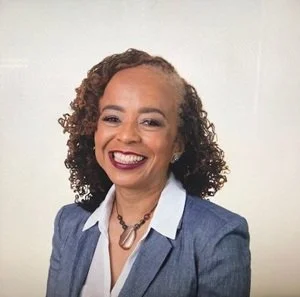
Dr. Desiree Byrd
Dr. Desiree Byrd is Associate Professor of Clinical Psychology at Queens College. A board-certified neuropsychologist, she is a nationally recognized leader in cross-cultural neuropsychology. She is working to bring critical approaches to neuropsychology training, science, and practice. Her research explores the roles of health disparities and culture in the expression of cognitive dysfunction in central nervous system disease. Her interests are in cultural identities, aging, dementia, HIV, substance use, and historically excluded populations. Her research has been supported by the National Institutes of Health and the Alzheimer’s Association. She has served in leadership positions for the American Psychological Association, the American Academy of Clinical Neuropsychology, and the National Academy of Neuropsychology. She is a Fellow of the American Psychological Association and the National Academy of Neuropsychology and a sitting member of the National Institute of Aging-Neuroscience study section. She has authored over 60 peer-reviewed publications and 10 book chapters. She teaches graduate and undergraduate courses on Culture, Neuropsychology, Psychopathology, and Decolonizing Psychology.

Dr. Rita Z. Goldstein
Dr. Rita Z. Goldstein is Professor of Neuroimaging of Addiction in the Departments of Psychiatry and Neuroscience at the Icahn School of Medicine at Mount Sinai. She directs the Neuroimaging of Addiction and Related Conditions research program, which employs multimodal neuroimaging, including MRI, EEG/ERP, and PET, together with innovative neuropsychological paradigms to investigate the neurobiological mechanisms underlying impaired cognitive and emotional functioning in human drug addiction and related disorders of self-control.
Dr. Goldstein formulated the Impaired Response Inhibition and Salience Attribution (iRISA) model, which highlights a central role of the prefrontal cortex in drug-related salience bias and compromised inhibitory control in addiction. This framework has received broad national and international recognition and has guided mechanistically informed research on addiction vulnerability, symptom expression, and recovery. She has authored over 160 peer-reviewed publications, including articles in Nature Neuroscience, Neuron, Nature Mental Health, JAMA Psychiatry, and PNAS. A major goal of her work is to facilitate the development of empirically grounded interventions to improve clinical outcomes in substance use disorders.
Dr. Goldstein is a Fellow of the American College of Neuropsychopharmacology and is the recipient of the Joel Elkes Research Award (2012) and the Jacob P. Waletzky Award (2013). She serves on the Scientific Council of the Brain & Behavioral Research Foundation and previously on the American College of Neuropsychopharmacology, and she has been elected Vice Chair of the upcoming Gordon Research Conference on Neurobiology of Drug Addiction (and its Chair in 2028).

Dr. Damiela Schiller
Dr. Daniela Schiller is a Professor in the Department of Psychiatry, the Nash Family Department of Neuroscience, and the Friedman Brain Institute at the Icahn School of Medicine at Mount Sinai. Her research is focused on how the brain represents and modifies emotional memories. Schiller got her PhD in Tel Aviv University where she developed a laboratory model for negative symptoms of schizophrenia. She then continued to do a postdoctoral fellowship at New York University where she examined methods for emotional memory modification in the human brain. Schiller joined Mount Sinai in 2010 and has been directing the affective neuroscience laboratory since. Her lab has delineated the neural computations of threat learning, how the brain modifies emotional memories using imagination, and the dynamic tracking of affective states and social relationships. Schiller’s work has been published in numerous scholarly journals, including Nature, Neuron, Nature Neuroscience, and the Proceedings of the National Academy of Sciences. She is a Fulbright Fellow and a Kavli Frontiers of Science Fellow, and has been the recipient of many awards, including the New York Academy of Sciences’ Blavatnik Award, and the Klingenstein-Simons Fellowship Award in the Neurosciences.
About the Moderator

Dr. Shilpa R. Taufique
Dr. Shilpa R. Taufique is Vice Chair for Faculty Development and Chief Psychologist of the Division of Psychology for the Mount Sinai Health System, and Director of the Comprehensive Adolescent Rehabilitation and Education Service (CARES) at Mount Sinai. She also partners with Mount Sinai Solutions to design and implement integrated behavioral health programs for law firms, financial institutions, and media organizations. A highly regarded educator, she teaches and supervises psychiatry residents, psychology fellows, interns, and externs.
Dr. Taufique earned her PhD in Clinical/Child/School Psychology from New York University and has received multiple honors for excellence in teaching and supervision, including the Faculty Award for Humanism in Psychiatry and the President’s Award for Excellence. With more than 23 years at Mount Sinai, she is recognized for building innovative, mission-driven programs that address complex clinical and organizational needs. Her expertise includes program design and development, group and systems dynamics, school and mental health consultation, identity and inclusion, trauma, and co-occurring mental health and substance use disorders.
A trusted consultant to external organizations, she leads team-building initiatives, culture change efforts, and leadership development across sectors. She has served as Board Chair of Creative Alternatives of New York and currently sits on The Art Therapy Project and AMAE Health Care Clinical Advisory Boards. Dr. Taufique and the CARES model have been featured on Lemonada Media’s Squeezed podcast, MSNBC’s Deadline with Nicolle Wallace, and CBS News in a special segment on innovative mental health solutions.
THE RESERVOIR began previews on February 5 and runs through March 22. You can purchase tickets here. The play is the 2026 mainstage production of the EST/Sloan Project, EST’s partnership with The Alfred P. Sloan Foundation to develop new plays “exploring the world of science and technology,” an initiative now in its twenty-sixth year.
Enjoy more related to THE RESERVOIR
Remembering the Complexity of Alzheimer’s Disease by Michael A. Yassa (program essay)
Playwright Jake Brasch and neurobiologist Stuart Firestein discuss THE RESERVOIR with Nick Dirks, president of The New York Academy of Sciences on the Shaping Science podcast (on YouTube; 50 mins)
“The Art and Science of Staving Off Cognitive Decline” Ira Flatow interviews playwright Jake Brasch on Science Friday about how Jake meshes science with theater in THE RESERVOIR.
“An intergenerational story of addiction, recovery, dementia, loss, and hope” Yale neuroscientist Dr. Nii Addy interviews playwright Jake Brasch and cast member Caroline Aaron about art, science, mental health, relationships, healing, and THE RESERVOIR on The Addy Hour. (podcast, 58 minutes)

